Hot Wheels and a Lesson in Cold Starts
TL;DR: I built a classifieds app for Hot Wheels collectors. Validated the problem, ran pilots, launched — and it died quietly from lack of critical mass. This is about doing everything “right” and still not making it, and why I think that’s okay.
This one is less technical, more personal — written more for me than anyone else.
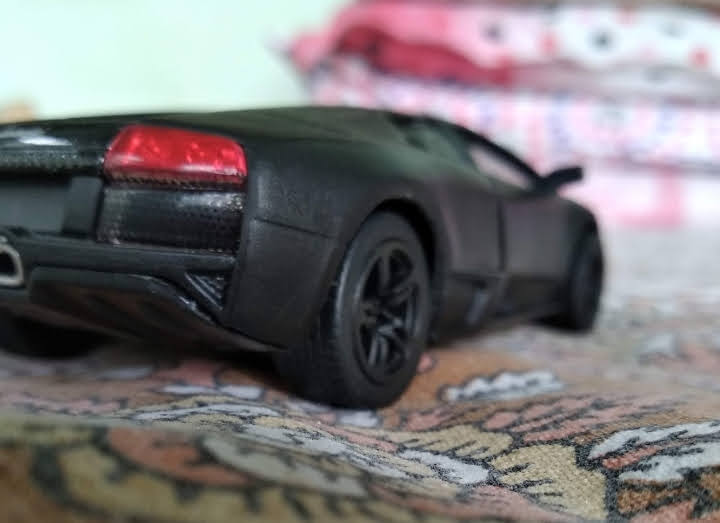
I wasn’t a “cars go fast” kid. I was more of a “look at the curves on that McLaren F1” kid. The kind that would stop mid-walk at a toy store to stare at a diecast model on a shelf — not to play with it, just to look at it. There’s something about a 1:64 scale model of a car that should cost half a million dollars sitting in your palm that just hits different. The Lamborghini you see above — that’s not Hot Wheels, it’s something else entirely, but I’ve had it for about twelve years now. Scissor doors and everything.
Fast forward to six months ago. I’m at a toy show with a friend, half-paying attention, and I spot a Hot Wheels display. Not the fantasy cars. The real ones — the castings that are actually modelled after actual cars. I pick up a few, put them back, and then ask the guy at the stall if he has the 1965 Mustang Fastback. He doesn’t. And then he tells me something that stuck: as soon as new stock hits, collectors and flippers grab it all. He took my number and added me to a WhatsApp group.
That was my first collector group. And for a few weeks, I was wide-eyed. Cars I didn’t know existed. People negotiating, trading, posting photos at midnight. It was chaotic and alive and I loved it. Then I did the math in my head — either I go all in and collect seriously, or one car is enough, because what’s the point of just two? So I kind of stepped back. Muted the group. Joined a couple more. Muted those too.
But I kept opening them occasionally. And every time I did, I’d find a wall of images and negotiations and follow-up messages and quote-replies — and somewhere in that pile, a car I actually wanted. By the time I found it, it was sold. And that was the moment.
The idea wasn’t new. A structured classifieds board for a community that was doing commerce over WhatsApp. But I was in the community — a 70-person group, a 50-person group — and that meant I understood the texture of the problem, not just the surface of it. The pain wasn’t abstract. A seller posts five photos, a hundred messages follow, and the original listing is buried forever. A buyer bids on a car in the comments and now twenty people are DMing the seller asking if it’s still available. It’s noise with a marketplace hiding inside it.
I talked to the group admins. I talked to resellers. I ran a closed beta. I wrote reports. The numbers were hard to argue with:
4,789 messages. 3,202 photos. 25 days. One group.
74 active people, peak activity hitting 491 messages in a single hour at 8pm. One person — one! — had sent 2,005 messages in that window. The problem was real. The people I spoke to liked the idea. Some wanted to co-design features with me. It felt, honestly, grand. The kind of project that just makes sense.
And I could build fast. Webhooks for live chat, email verification, auctions with an anti-snipe mechanic, a mobile-friendly UI. I kept shipping. Every conversation with a potential user turned into a feature, and every feature went live quickly. The gap between idea and product had never felt smaller.
Then I launched. And it worked — technically. People signed up, listed cars, the chat worked, the auctions ran. Some people genuinely loved it. A few asked for features I hadn’t thought of. Others just didn’t show up. And that last part, quietly, was the whole problem.
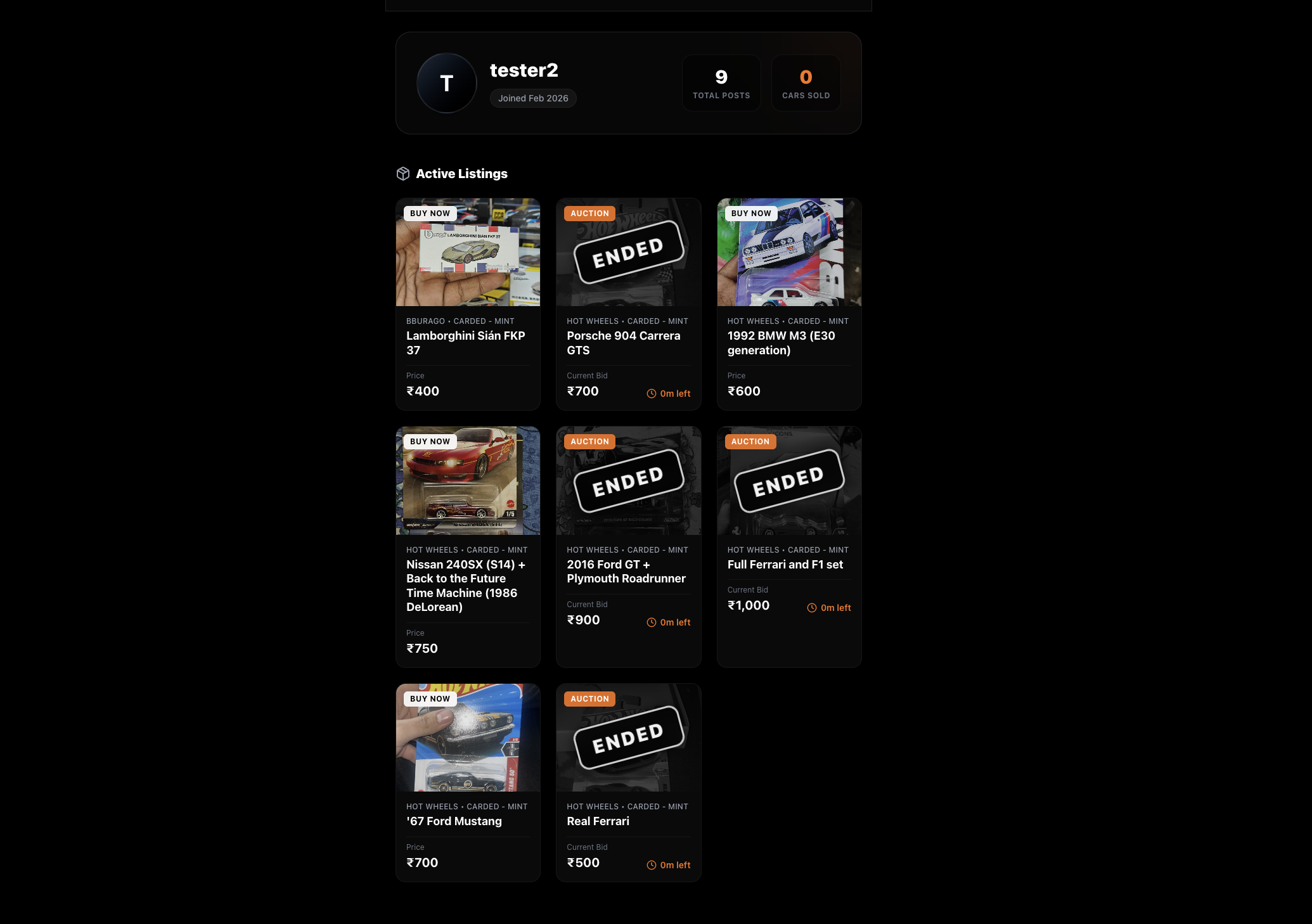 What it actually looked like. Dark, gallery-style, cars listed with photos and prices. It worked.
Diecast Dow is a marketplace. Marketplaces need two sides to have value — buyers need sellers cataloguing inventory, and sellers need buyers showing up to make it worth the effort of posting. Neither side had enough reason to move first. The buyers who did join couldn’t find enough listings. The sellers who joined couldn’t find enough buyers. And so each side looked at an empty room and left.
This is the cold start problem, and it has a body count. It’s not a bug you can fix in a deployment. It’s a structural condition that the best-built product in the world can’t engineer its way out of without solving for density — enough of both sides, in the same place, at the same time. I didn’t solve for that. I solved for the product.
And here’s the thing I keep turning over: I did everything I was supposed to do. I found a real problem. I talked to users. I validated before building. I shipped fast, iterated, listened. The reports looked good. The conversations were encouraging. The launch was clean. And it still didn’t work — not because anything was wrong, but because enthusiasm for an idea is not the same as willingness to change behaviour. The people in those WhatsApp groups had adapted to the chaos. It was messy but familiar. My app asked them to go somewhere new, and for most of them, the mess wasn’t painful enough to justify the move.
Here’s what I actually took from this: AI moved the bottleneck.
Think about a non-technical person with the same idea — they’d spend months just getting something to work, stay in the building phase until the energy runs out, and probably never launch at all. They’d be in a bubble the whole time with zero feedback. Being technical meant I could build fast, but what AI did was make that speed accessible to everyone. The hobbyist, the non-dev, the person who just has a good idea — they can now iterate fast enough to actually hit market reality instead of running out of steam in a garage. I built fast enough to hit the real wall early. That’s not nothing. That’s actually the point.
AI didn’t make the startup easier. It made the lesson faster. The hard part was never the code. It was always going to be: will people actually change what they do? And I found that out in weeks, not years. I’d call that a win.
Diecast Dow is sitting on free Vercel and Railway tiers right now — it’s still up if you want to poke around at diecast-deals.vercel.app. I have no plans to pay for the compute. Maybe someone stumbles on it and it finds its moment — I don’t know. But I’m not sad about it. I got to build something real for a community I was genuinely part of, I learned more about marketplaces and cold starts and the gap between validation and adoption than I could have from reading about it, and I got to do it at a pace that would have been impossible a few years ago.
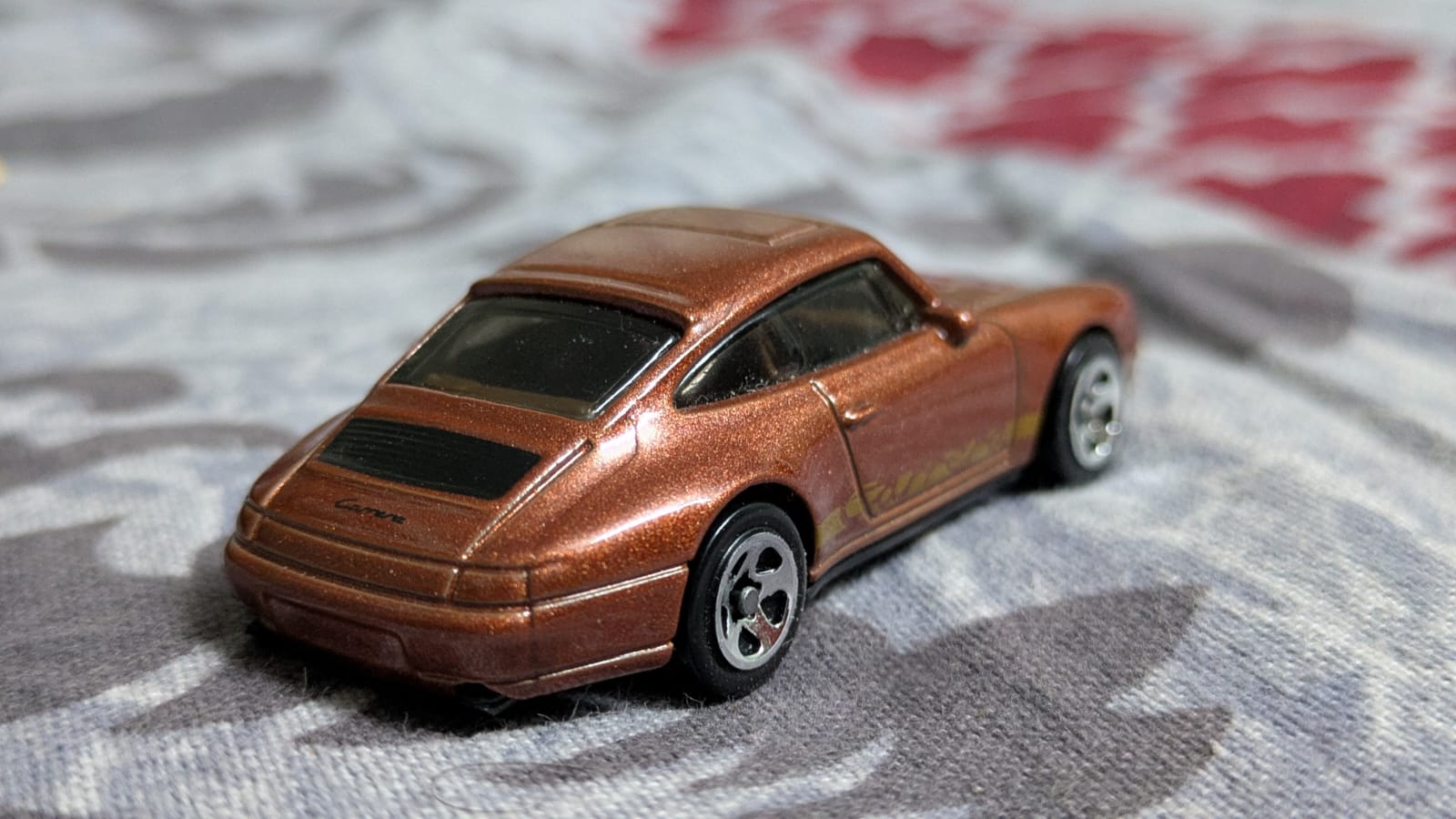
And yes — I finally had my one pick. This Porsche 911 Carrera came from the group. Worth it.
On to the next thing. Let’s see what’s in store.
If you’re a collector and want in on the WhatsApp groups — drop me a message and I’ll add you.