Sim-and-Real Co-Training: A Simple Recipe
TL;DR: Skip sim-to-real transfer. Train one policy on a mix of a small real dataset and a large simulated one. Across 6 tasks on a Panda arm and a GR-1 humanoid, adding sim data raises average real...
TL;DR: Skip sim-to-real transfer. Train one policy on a mix of a small real dataset and a large simulated one. Across 6 tasks on a Panda arm and a GR-1 humanoid, adding sim data raises average real...
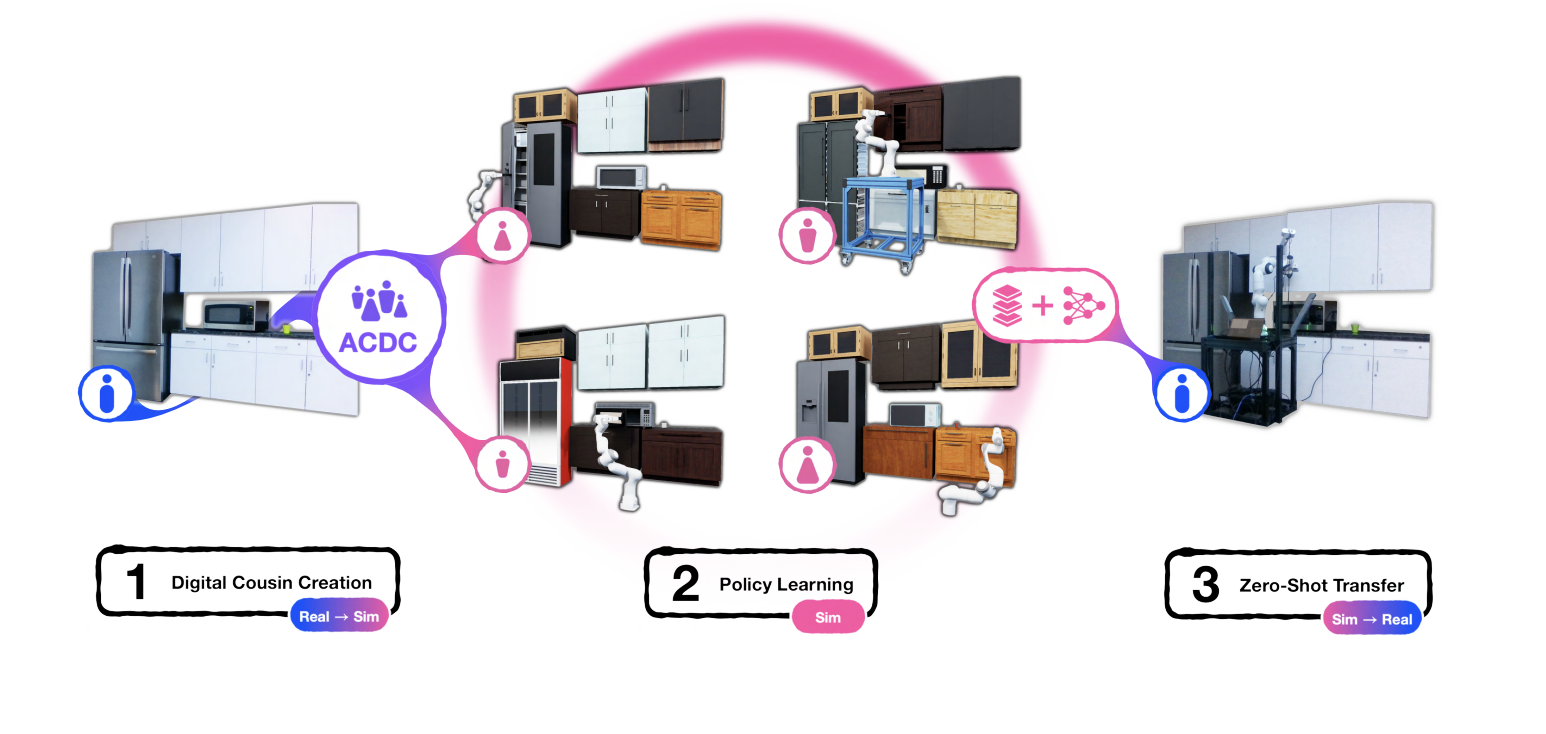
TL;DR: A digital twin is an exact simulated copy of a real scene. It’s expensive to build, and a policy trained in it overfits to that one copy. A digital cousin is a simulated scene that keeps the...
TL;DR: How should you spend a data-collection budget for a robot policy? This paper’s answer: on diversity, not volume. Zero-shot performance in new environments and on new objects follows a rough ...
TL;DR: Train an image encoder and a text encoder to map matching (image, text) pairs close together in a shared embedding space, using contrastive learning on 400 million internet-sourced pairs. Th...
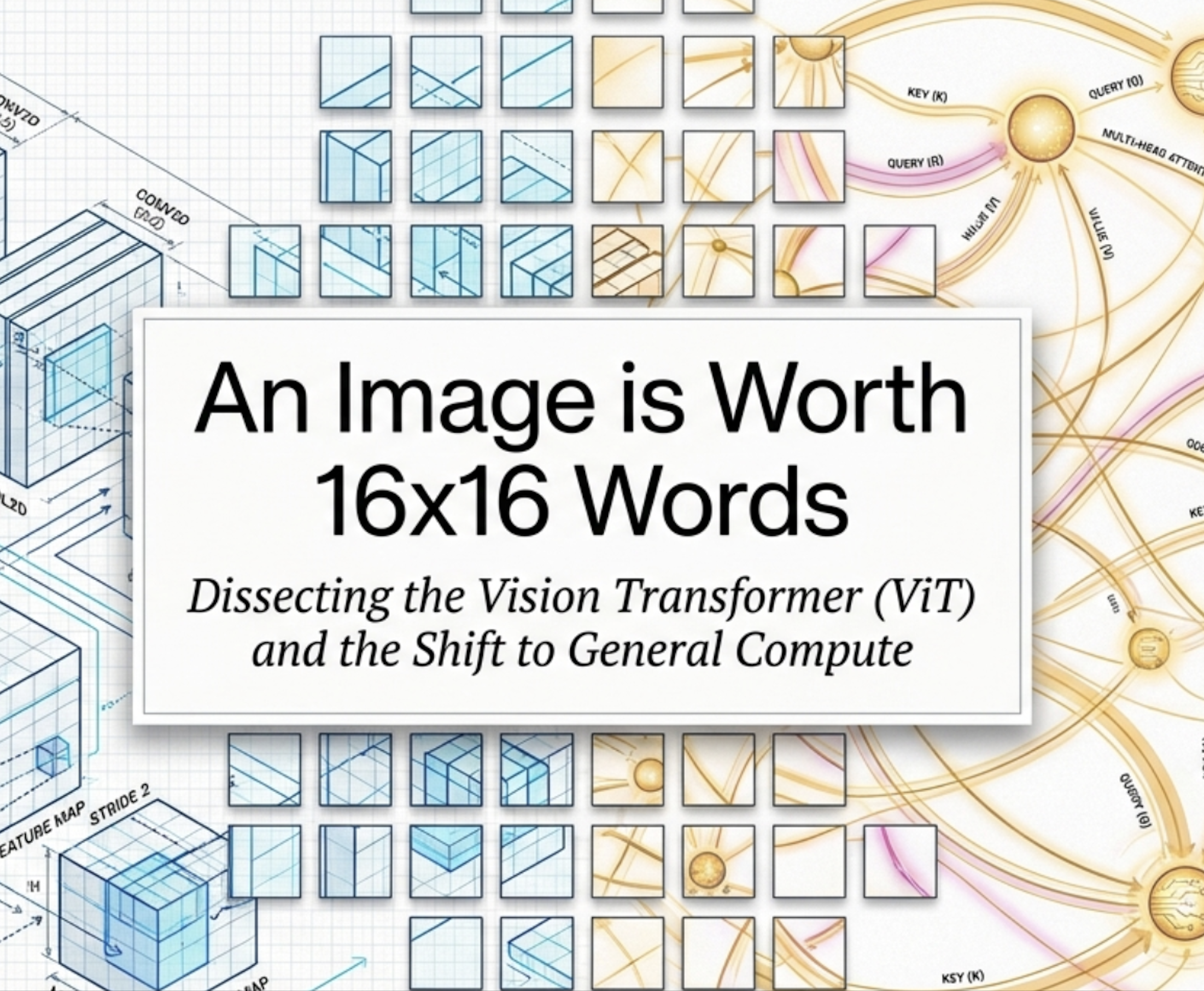
TL;DR: Cut an image into 16x16 patches, flatten them, project to embeddings, prepend a [CLS] token, add position embeddings, and feed the sequence to a standard transformer encoder. That’s ViT — a ...

TL;DR: NeRF encodes a 3D scene as a continuous function: feed in a 3D coordinate and a viewing direction, get back a color and a density. Render any viewpoint by marching rays through this function...
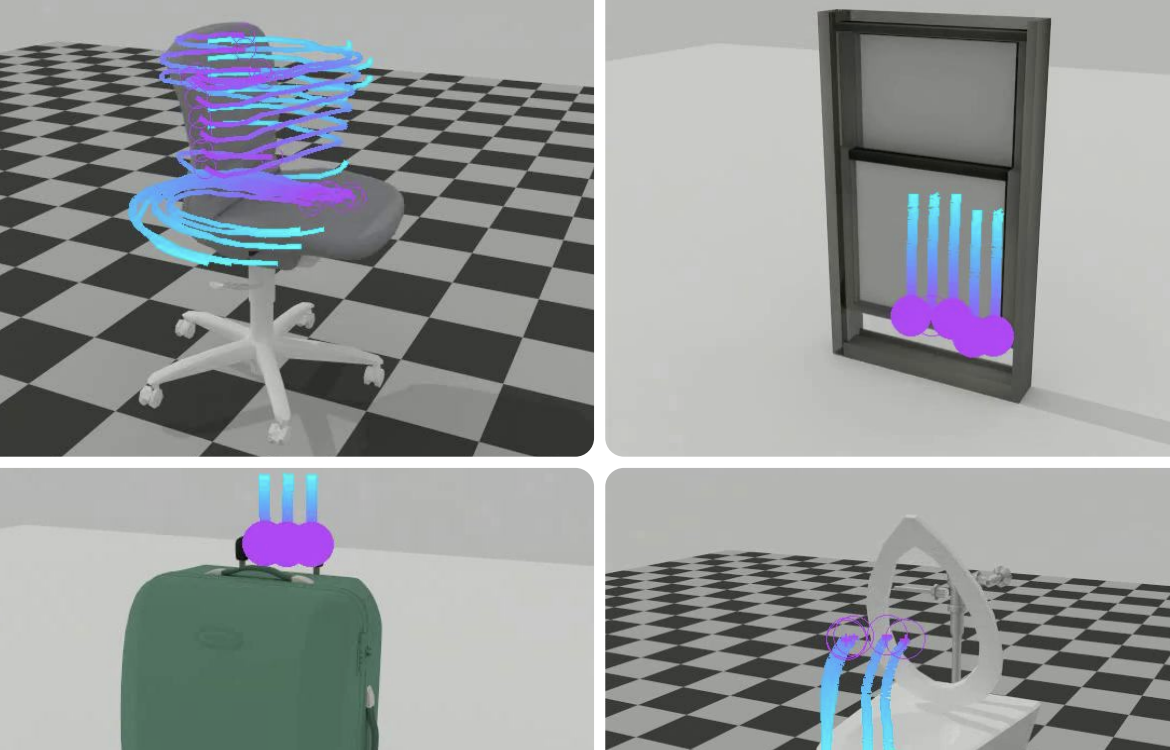
TL;DR: Articulated 3D assets (doors that open, drawers that slide, laptops that fold) are essential for robot simulation but painful to build by hand — ~40 minutes per object with dedicated annotat...
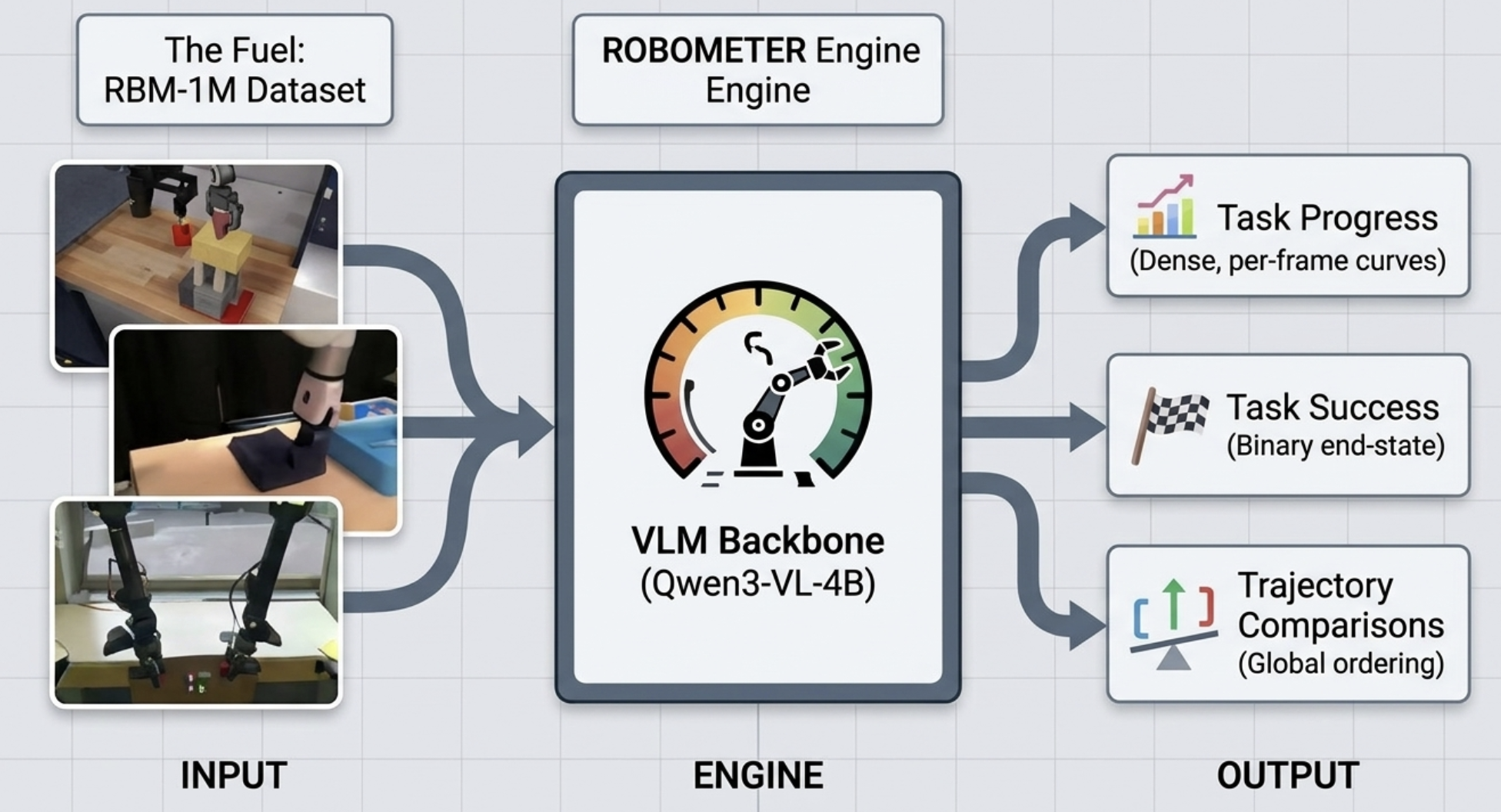
TL;DR: Zero-shot reward tricks (like TOPReward) are elegant but limited. ROBOMETER asks: what happens if you actually train a reward model at scale? Built on Qwen3-VL-4B with three lightweight MLP ...
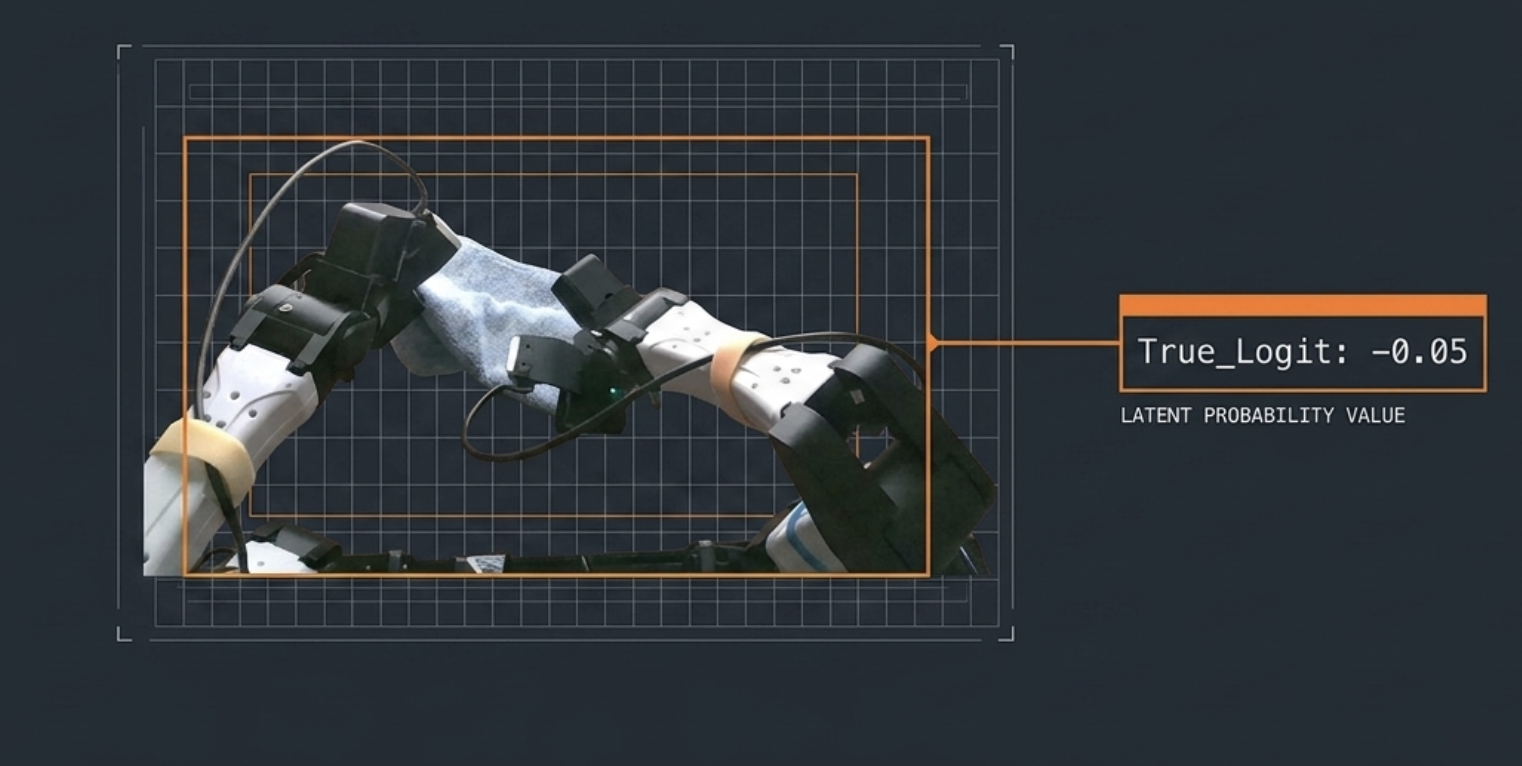
TL;DR: Need a reward signal for robot learning but don’t want to train a reward model? Prompt a VLM with “this trajectory completes the task: True or False?” and use the log-probability of the “Tru...
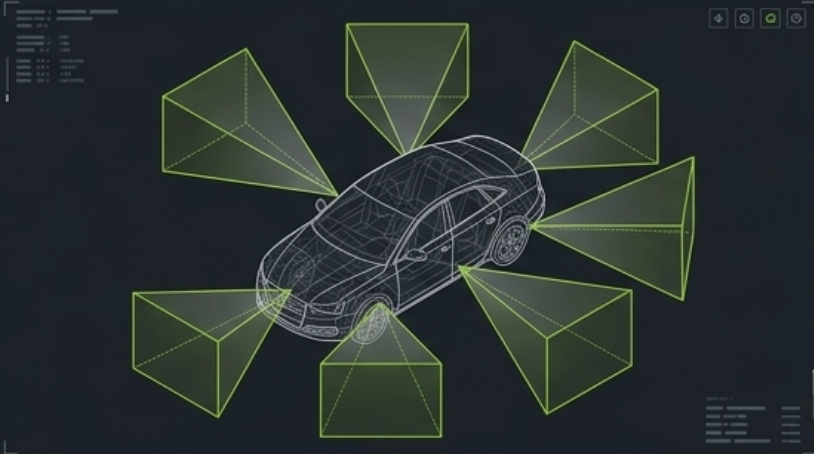
TL;DR: A pre-trained world model is only useful if it transfers to real-world tasks. Cosmos-Transfer translates simulator outputs into photorealistic video via ControlNet-style conditioning on edge...